


How To… Having a Baby in Spain
Having a baby can be one of the biggest and most exciting times in your life. However, what is it like having a baby in Spain? With language barriers, it can be a terrifying experience too. Obviously, as with any pregnancy regardless of where in the world you are – you will want to know where to get care and support for your new arrival.
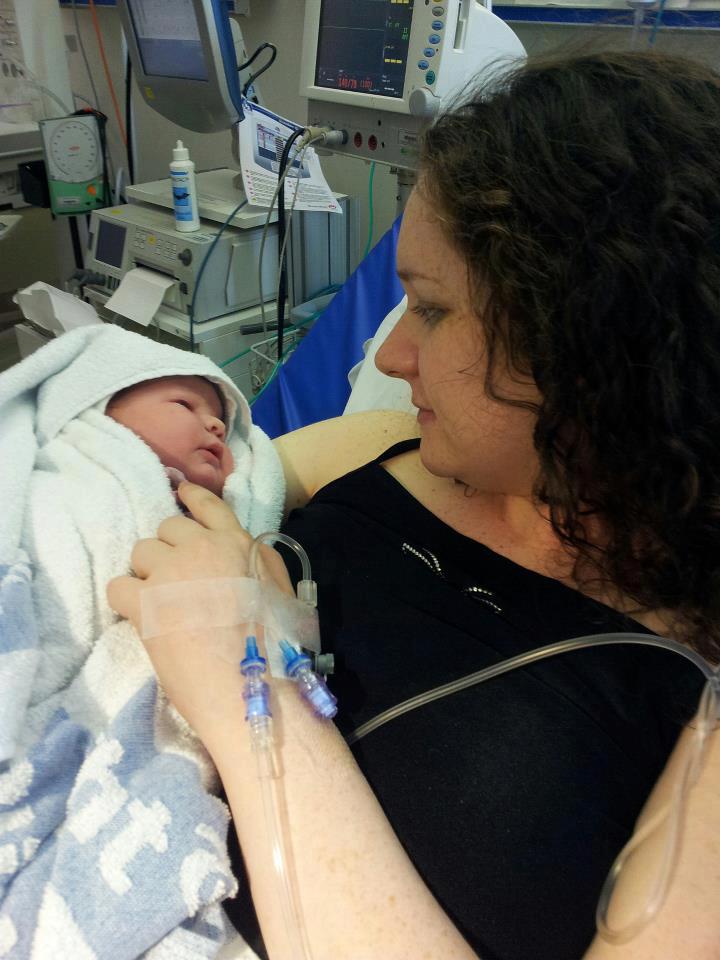 OK… this photo wasn’t taken in Spain, but it’s a chance for me to show off my nephew Calvin, and my sister (his Mum), Naomi
The health care in Spain is excellent, and the support for expectant Mums is especially thorough and well regarded. You can get this either from your own health centre, or you may opt to go private.
Pre-Natal Care in Spain
As soon as you suspect you may be pregnant, make an appointment with your own doctor. They will confirm that you are pregnant, will give you a good examination, and will go ahead to arrange blood tests and an early ultra sound scan.
The following dates may vary according to the area in which you live – but will give you a rough guide to how often you will be seen:
- every 4 weeks until week 28
- every 2 weeks until week 36
- weekly until delivery
The midwife should not be underestimated, as she provides a great source of support to the expectant mummy. Have a chat to your Doctor to see if your own clinic has a midwife resident there, or to find out whether you need to visit another nearby clinic for this. Many clinics in Spain have the teams on site – so this shouldn’t be a problem. The Spanish have various words for “midwife”. Comadrona is mainly used in Mainland Spain. Partera is used in Latin America and the Canary Islands. We are also reliably informed that your regular visits in the Canary Islands may be with a matrona, a senior nurse. It is llevadora in Catalan.
Pre-Natal Classes
Knowing what will happen during the pregnancy and at childbirth can give you vital preparation and of course improve how well you and your unborn child get on during the pregnancy. Again, speak to your Doctor and your Midwife to see what options are available to you, and whether they can offer support in English for you if this is somethign that makes you particularly nervous.
The courses should include what to expect when you are in labour, as well as breathing and relaxation techniques and preparation for baby feeding.
Where to Have Your Baby
The Spanish hospitals offer a very high standard of natal care, with emergency personnel services on hand in case of any problems. Home birthing is not often encouraged in Spain these days – but most women want to have easy access to medical help when going through this experience anyway.
Your Doctor/Midwife team will be able to talk you through the facilities, and what types of pain relief are available.
Following normal vaginal delivery without any “out of the ordinary” complications, Mummy and baby can expect to go home within 24 hours. Following a Caesarean section, however, that may not be for 3 to 5 days.
When you are leaving the hospital, you will be issued with all the paperwork for registering the birth of your new baby, as well as receiving advice on various vaccinations, and you will receive an infant record book which records your new child’s health from birth to 18 years of age.
Registering Your New Baby
Births must be registered as soon as possible at your nearest Registry Civil. The hospital will be able to tell you where that is. As the parent/s, it is your responsibility to make sure this is completed, and you must do it in person. In some very rare cases (such as the mother being too unwell to attend herself) the hospital, clinic or midwife will register the birth.
There are two types of birth certificate:
- short/abridged (un extracto de inscripción de nacimiento or certificado simple): contains the date of birth, the names of the child and parents and the inscription number
- full birth certificates (un certificado literal de nacimiento): full certificates may be needed for registration with the Consulate of a baby born to foreign national resident in Spain
The birth registration includes:
- The name of your new baby
- The date, time and location where you gave birth. In the case of multiple births, when the exact time is unknown for each new-born, a note will be made of the order in which they were born, or that this could not be determined
- The gender of the new-born, and its name
- The parents names, when the relationship is legally recognised
- The number assigned to the birth or verification file
- The time of registration
Birth certificates must state whether a child is born in or out of wedlock. Children born within 6 months of their parent’s marriage, or within 300 days of a divorce, a marriage annulment or the death of the father are all considered legitimate.
You will need to take the following with you to the Civil Registry:
- Medical delivery report (the hospital where you gave birth will provide you with this)
- Official proof of identity of the parents (passport etc)
- Family Book (or a marriage certificate duly legalised and translated, when appropriate)
Registering a child born outside of wedlock
In this case, a statement is required from both parents, with the father and the mother both going to register the birth in person, providing the following documentation:
- Medical delivery report (this form is provided by the hospital where the delivery took place)
- The parents official identification
- Indication of the mother’s marital status
- If a prior marriage existed, the legal presumption of paternity must be removed by providing: Marriage certificate (with the corresponding note), and the separation or divorce decree (witnessed)
- In the case of a de facto separation, two witnesses must accompany the interested party to the Register
IMPORTANT EDIT: OCTOBER 15 2015
As of today, hospitals can now register new babies. Parents can choose to use the facility, or do it themselves.
Post Natal Care
Post natal care tends to be fairly limited. Social security merely offers a routine six week post natal examination (unless, of course, there are complications).
Statutory Maternity Leave
Statutory maternity leave in Spain is currently 16 weeks paid leave from work, which may be taken before or after you give birth. This can increase by a fortnight for each additional child in the event of a multiple birth.
Fathers are entitled to paternity leave; it comes as a shared part of the mother’s maternity leave. If there are complications for either the baby or the mother the father is entitled to a longer period of time off work.
Benefits
You will need to confirm your eligibility for social security care as soon as possible.
New mums are entitled to a payment of €100 per month until the child is three. Only mothers who are Spanish citizens or foreigners who have been resident in Spain for at least two years prior to the birth are eligible for this payment. However, parents who adopt a child within Spanish territory are also eligible for this payment.
Working mums are also entitled to a monthly allowance for childcare. To apply, contact your local Social Security office (Seguridad Social)

Elle, along with Alan, is the owner of Spain Buddy and the busy web design business – Spain Web Design by Gandy-Draper.
Born a “Norverner”, she then spent most of her life “Dann Saff” before moving to Spain in 2006. Elle’s loves are Alan, the internet, dogs, good food, and dry white wine – although not necessarily in that order.
Disclaimer
Some of the links on this website may contain an affiliate link. It costs you no more to use one of these links, but we may receive a small payment for you doing so.
As an Amazon Associate we earn from qualifying purchases. Amazon and the Amazon logo are trademarks of Amazon.com, Inc. or its affiliates.
Information correct at time of publication.


Alf
September 26, 2013 @ 1:38 pm
Not getting broody are you Elle?
Elle Draper
September 26, 2013 @ 1:51 pm
Hell no!
Mind you… Alan buys me a puppy when I do get a little “clucky”. No room for any more though ;)
Elle x
Adam Norsworthy
September 28, 2013 @ 12:23 pm
Great article Elle. Having had 3 kids in Spain over the past 5 years I can say the information above would certainly have been useful. It will help many people who are expecting.
I would add that while the doctors often prescribe a Vitamin D supplment, you can instead expose your baby to morning or afternoon sunlight (not midday) – we were told to do it twice a day for 30 minutes. This is more natural, worked great and something we are generally not able to do in the UK!
we also found that 4 pediatricians gave us 4 different diagnoses, so we picked the one we agreed with and stuck with that pediatrician. It made us feel nervous at first that the ‘experts’ disagreed, but my adivse is when you find one you like, stick with them, and only them.