


The Good, The Bad and The Ugly
All of us at some point would have heard or read about Cholesterol, LDL, HDL and Triglycerides but what exactly is it and why is it important?!
Basically we need cholesterol; it has some very important roles in our bodies;
 The building and maintenance of cell membranes
- The production of sex hormones and those released by the adrenal glands
- Converting sunshine to vitamin D
- Metabolising fat soluble vitamins A, D, E and K
- Stimulating nerve fibres
 The building and maintenance of cell membranes
A cholesterol molecule is a lipid, which is a category of water-insoluble substances such as waxes, oils and fats. Because it can’t dissolve in water or watery substances like blood, cholesterol can’t move around in the bloodstream on its own, it needs some help. In order to travel around the body, cholesterol combines with protein; forming a lipoprotein (lipid + protein) this coats the cholesterol. This is where the fun begins as all lipoproteins are not made equal therefore the introduction of LDL, HDL and Triglycerides.
LDL (low density lipoprotein)
This is more cholesterol than protein. This is the bad cholesterol. LDL carries cholesterol from the liver to cells. If too much is carried, then the cells contain too much for them to use. This can result in a harmful build-up of LDL. The danger of LDL is that it increases the risk of heart and artery diseases.
HDL (high density lipoprotein)
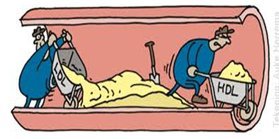
This is more protein than cholesterol. This is the good cholesterol which does the opposite of LDL. HDL takes the cholesterol away from the cells and back to the liver. Once in the liver cholesterol is either broken down or expelled from the body as waste.
Triglycerides (the form in which most fat exists in the body, and food)
Triglycerides and cholesterol come together to form (in simple terms) fat in the blood. Triglycerides can enter the body from fat in the food we consume, or they can be made by the body from things such as stored carbohydrates. Essentially if you consume more calories in a meal than your body will use, the remainder is stored in fat cells in the body for use at a later date.
In Conclusion: Everyone’s body needs cholesterol, but too much can spell trouble for some people. The body gets cholesterol in two ways: 80% of it is produced by the liver and the rest comes from your diet.
Cholesterol levels can increase with:
- Diets high in saturated fats, Trans fats, and sugar (animal products, processed foods etc.)
- Obesity
- A sedentary lifestyle
Since no one can predict with certainty which people with high cholesterol will develop heart disease, play it safe and keep your cholesterol levels in check. Physical activity affects the measure of HDL and LDL more effectively than any other measure alone, but it has to be done regularly to maintain the improvements. For more advice visit your doctor and request a cholesterol test, prevention is better than cure!
Mitch
I have my own Personal Training business with two private gyms- one including fitness classes- and now expanded to include All Inclusive Personal Training Holidays. People travel from all over to enjoy what Lanzarote has to offer – contact me via my website for more information
http://www.personaltrainerlanzarote.com
You can find out more about Mitch during our interview with him in January 2013. Click HERE to find out more
Disclaimer
Some of the links on this website may contain an affiliate link. It costs you no more to use one of these links, but we may receive a small payment for you doing so.
As an Amazon Associate we earn from qualifying purchases. Amazon and the Amazon logo are trademarks of Amazon.com, Inc. or its affiliates.
Information correct at time of publication.


